

How to find your target audience is not just a marketing step; it’s the foundation of all business growth. Marketing success doesn’t begin with creativity or budget. It begins with clarity. Specifically, clarity about who your audience is, what they value, and how they make decisions. Today, with countless channels, metrics, and trends, businesses have more tools than ever. Yet many still overlook the most critical question: who are you trying to reach? You can do all the creative, high-effort marketing work in the world, but if you’ve targeted the wrong audience, it’s all wasted. The best ideas fall flat when they don’t land with the right people.
Understanding your target audience isn’t about guesswork or assumptions. It’s about collecting insights, analyzing behaviour, and identifying opportunities where real connections can be built. If you want better ROI, lower acquisition costs, and stronger brand loyalty, this process cannot be skipped.
So let’s break down a step-by-step method to help you identify and connect with the right people.
Target Audience vs. Target Market: What’s the Difference?
Understanding the difference between a target market and a target audience is essential for creating focused and effective marketing efforts. While your target market represents the larger group of potential customers your business aims to serve, your target audience is the specific segment most likely to engage with your content, ads, or campaigns. Recognizing this distinction allows you to design broader strategies that align with overall business goals, while ensuring your messaging is directed at the right people. This clarity improves precision, reduces wasted effort, and strengthens the overall impact of your marketing.
- The target market is the larger group of potential customers your business aims to reach. It includes everyone who may benefit from your product or service and helps shape decisions around product development, pricing, and positioning.
- The target audience, on the other hand, is a more focused group within that market. This group is the specific segment you direct your advertising and marketing messages toward. Target audiences are usually defined by shared characteristics such as age, location, interests, or buying behaviour.
How to Find Your Target Audience in 7 Practical Steps
Step 1: Define What You’re Offering
Before you can identify your target audience, you need a clear understanding of what you are offering. What is the main function of your product or service? What problem does it solve, and why is solving that problem valuable? This clarity forms the foundation for your positioning and communication. If your value proposition is vague or inconsistent, even the most well-executed marketing efforts will likely fall short.
Take Slack as an example. In its early days, Slack was introduced as a tool designed to eliminate internal email. However, after analyzing how users interacted with the platform, the company discovered that its true value lay in helping teams move faster, collaborate more easily, and centralize communication. Slack refined its messaging to focus on productivity, speed, and team coordination. By doing so, it was able to better connect with fast-growing teams and startups that needed a reliable communication infrastructure. As a result, Slack scaled from 15,000 daily active users to more than 500,000 within a year.
Step 2: Start with Your Existing Customers (If Any)
The most reliable starting point for defining your target audience is your current customer base. Analyze transactional data to find patterns around buying frequency, average order value, and product preferences. Go further by examining customer support tickets, reviews, and survey responses. These insights can reveal what problems your product solves, what expectations your customers have, and what might be holding them back from making repeat purchases.
For example, when RapidAI, a medtech company specializing in vascular diagnostics, launched its new platform, it discovered that clinics and hospitals prioritizing speed and accuracy were its most engaged users. After segmenting these high-value customers, the company delivered content focused on rapid diagnostics and clinical workflow integration. Six months after launch, their organic contacts grew by 1,373% and website traffic climbed 147%.
But what if you’re just starting or entering a new market with no historical data to rely on?
In that case, shift your focus to proxy signals. Study adjacent or competitor brands to understand who they’re targeting and how. Look at online reviews, public case studies, and customer testimonials in your industry to identify recurring needs or pain points. Use keyword tools like Google Trends, Ubersuggest, or AnswerThePublic to understand what potential users are searching for. You can also run small-scale ad tests across different audience segments to observe where engagement and conversions begin to surface.
If you’re launching something new, your target audience might not exist in your CRM, but it often exists in the patterns and frustrations people already express online. Use this early intelligence to build an initial audience hypothesis, which you can refine over time through feedback and behavioural insights.
Step 3: Build Audience Segments Using Data (If Any)
Segmentation is the backbone of modern marketing. Without it, even the most creative messaging falls flat. The most impactful segmentation strategies rely on a mix of quantitative (measurable, numerical) and qualitative (insight-driven, subjective) data to create a fuller picture of your audience.
Here’s how common segmentation types relate to these data approaches: Here’s how common segmentation types relate to these data approaches:
| Data Type | Description | Purpose | Data Category |
| Demographic | Age, income, location, education, job title | Defines broad market characteristics | Quantitative |
| Psychographic | Values, attitudes, interests, lifestyle choices | Explores emotional and psychological drivers | Qualitative |
| Behavioral | Purchase history, website activity, and content engagement | Tracks user actions and preferences | Quantitative with qualitative insights |
For instance, Spotify doesn’t segment users by age or country alone. It uses behavioural insights by identifying users as morning joggers or late-night focus listeners based on their listening habits. This lets them deliver playlists that feel personally relevant and timely, which improves user retention and engagement.
But what if you don’t have this data?
If you’re starting without detailed audience data, focus on what’s readily available. Tap into basic web analytics, social media performance metrics, or direct customer feedback to form your initial segments. Even limited insights can reveal patterns worth acting on. As your business grows and more data is collected, revisit and refine your segmentation approach to reflect actual behaviours, preferences, and needs more accurately. This iterative process helps ensure your targeting remains relevant and effective over time.
Step 4: Analyze Competitors to Spot Untapped Opportunities
Studying your competitors helps you understand what messages are already saturating the market and where gaps exist. Use tools like SEMrush or Ahrefs to find the keywords and search terms your competitors are consistently ranking for. Then look at their content across digital channels to see which themes are getting the most attention and which areas seem underdeveloped. Tools like SimilarWeb or Sprout Social can give you insight into their audience engagement, referral sources, and content performance. This is not just about replicating what works for them. The goal is to identify areas where customer needs are not being fully met.
Additionally, when you analyze what your competitors are not saying, you open the door to new opportunities. Most businesses focus on the most obvious or profitable customer groups. But within the broader market, there are often smaller, underserved segments that are both easier to engage and more responsive to focused messaging. These could be professionals in a specific industry, decision-makers in a certain company size, or users with a particular workflow or challenge. Rather than entering a crowded space with the same narrative, shift your strategy toward the customers who are overlooked. You’ll often find lower acquisition costs and stronger brand affinity where the competition is not looking.
Step 5: Build Buyer Personas Using Verified Insights
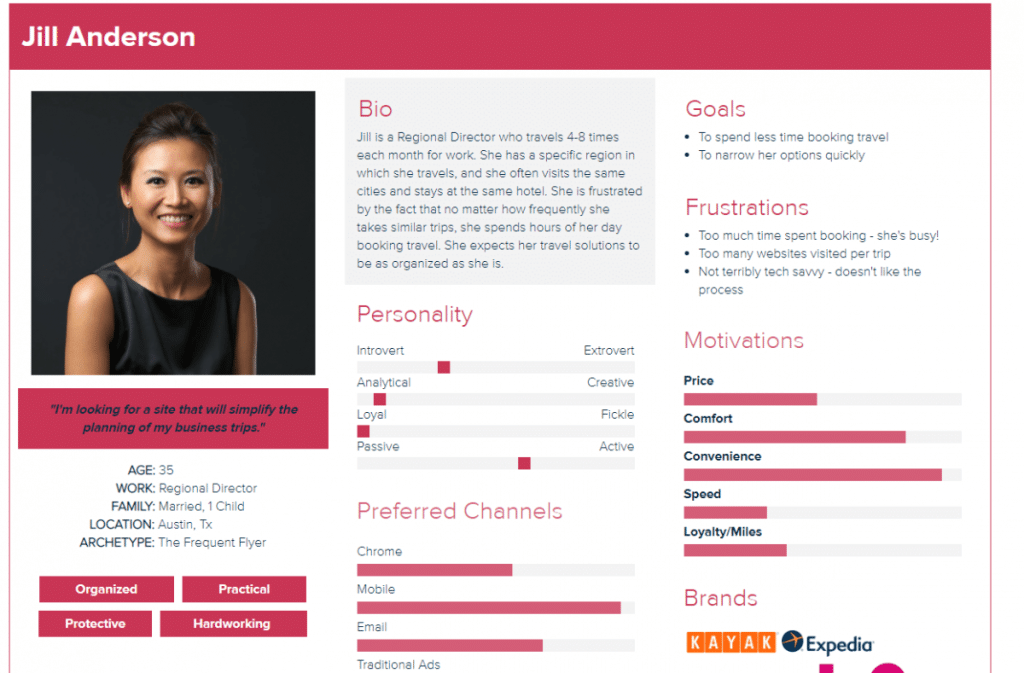
Effective buyer personas are not made-up avatars with generic names and vague habits. They are built using concrete data collected from your customers and prospects. This includes interviews, surveys, Customer Relationship Management (CRM) and sales data, on-site behaviour, and even feedback from leads that didn’t convert. When done right, personas reveal the real motivations, pain points, objections, and preferences behind purchase decisions.
Once this information is collected, structure it into clear, actionable profiles. Give each persona a name and relevant context such as industry, business size, pain points, and decision-making influence. Then, map these personas to each stage of the buying journey; identify what triggers their interest, what slows their progress, and what helps them commit. This clarity helps teams create focused messaging that answers real questions and addresses real concerns, rather than guessing what might work.
When used effectively, buyer personas can deliver measurable business results. By aligning marketing strategies with real customer insights, businesses gain the clarity needed to speak directly to what their audience values. This precision improves engagement and increases conversion across marketing channels. One area where this impact is clearly seen is email marketing. Additionally, marketers who segment email lists based on customer data have seen up to a 760% increase in revenue from email campaigns. Instead of guessing what might work, personas help you focus on specific needs, preferences, and triggers. This makes each interaction feel more relevant and more likely to convert.
Step 6: Align Message with Channel and Context
Even with a clear message and a defined audience, choosing the wrong platform or tone can dilute your impact. That’s why matching content to the appropriate platform is just as important as the message itself.
| Platform | Ideal Use Case | Content Formats That Work Best |
| Industry leaders, decision-makers | Case studies, industry insights | |
| Trend-conscious and visual audiences | Reels, short videos, behind-the-scenes stories | |
| Ongoing engagement | Newsletters, how-to guides, product updates | |
| YouTube | Education-focused viewers | Tutorials, deep dives, thought leadership videos |
Right message, right place, right outcome.
Step 7: Monitor, Test, and Evolve Continuously
Your audience will not remain the same over time. Shifts in industry trends, buyer preferences, competitive messaging, and even global events can influence how people engage with your brand. To stay relevant, your strategy must be adaptable and capable of ongoing adjustment. Monitoring performance metrics is just the beginning. What truly drives progress is a cycle of structured experimentation and applied learning.
A/B testing is a critical part of that process. By testing variations in landing pages, email headlines, ad copy, or CTA placements, you generate real user data that guides future decisions. These tests help refine messaging, prioritize top-performing features, and identify which customer segments respond best to each tactic. Moreover, optimization is not something that comes after a campaign ends. It should be embedded within your day-to-day operations. Each test result gives you sharper insights into how your audience thinks, what influences their choices, and how to reach them more effectively across channels.
Final Thoughts: Strategy Starts with Audience Clarity
Audience targeting is not just a marketing function. It affects product development, customer support, content planning, and long-term business growth. When done right, it ensures you’re engaging in meaningful conversations with the people who matter, rather than simply pushing messages into the market.
When you know who you’re speaking to and understand what they care about, your communication becomes sharper. Your acquisition costs drop. Brand loyalty strengthens. And your marketing finally starts to deliver what it’s supposed to.